Thermal and visual together
Moisture under a roof membrane and the crack that let it in are captured in the same pass, from the same position. That correlation is what makes a report actionable.
Equipment
Equipment is not the point — the findings are. But the platform decides what findings are possible, so it is worth knowing what is actually going up and what is going in.
A compact enterprise thermal aircraft carrying a 640 × 512 radiometric sensor and a 48 MP visible camera on one gimbal, so a single flight produces thermal and visual imagery of the same target from the same position — no swapping payloads, no second trip.
Moisture under a roof membrane and the crack that let it in are captured in the same pass, from the same position. That correlation is what makes a report actionable.
Every pixel carries a temperature value, so a finding can be stated as a measured delta rather than “this area looked warm”. Accuracy is ±3 °C, which is what the sensor is honestly good for.
At 866 g it goes up from a driveway, a boat deck or a catwalk without a crew or a closed area — which is most of what residential and light commercial work actually needs.
A full roof or a shoreline run gets covered on one battery, so the survey is one continuous capture instead of stitched-together fragments.
A six-thruster ROV that holds position and attitude in current, lights its own subject, and can physically grip and retrieve — the difference between reporting a problem and resolving it.
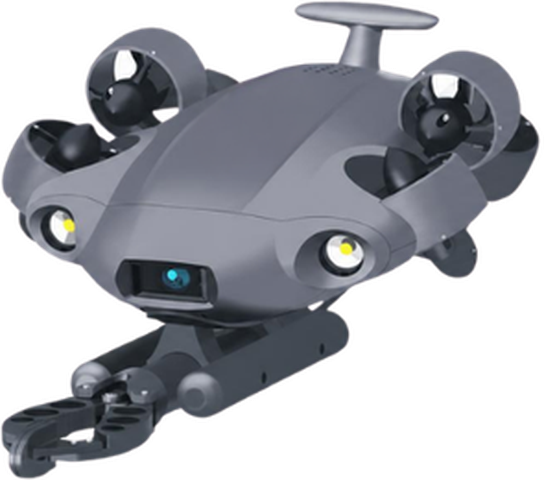
Posture and depth lock keep the camera steady against current. Without it, underwater footage is unusable — you cannot assess a piling from a drifting camera.
It can hover, strafe and look straight up at the underside of a dock or hull. Four-thruster ROVs cannot.
6,000 lumens matters more than sensor quality below the waterline. Lake water absorbs light fast.
It can recover a dropped item, clear debris off a screen, or place a marker — not just film the problem.
Plenty of people own a drone. Far fewer are flying a radiometric thermal sensor that reports a real temperature on every pixel, and fewer still are also running an ROV that holds depth in current and can pick something up off the bottom.
If you are comparing quotes, the equipment is the honest way to tell the difference — because it determines what can actually be measured, not just photographed.
Also carried
Specifications are manufacturer figures for these platforms. Actual results depend on conditions — wind, light, water clarity and current all affect what a survey can resolve.
Tell us what needs looking at. Call (205) 567-0548 or send the form.